Estimated reading time: 5 minutes
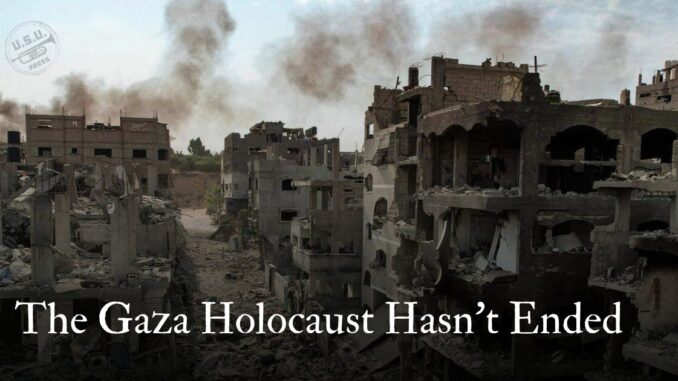
Eight months into the latest “ceasefire”, the genocide against Palestinians in Gaza, perpetrated by the zionist occupation forces, continues without respite. Occupation forces in Gaza city have reportedly installed “military cranes”, hoisting autonomously operated machine guns 30 meters into the air from which to fire on the strip’s surviving inhabitants. Gunfire peppers the strip from a high at random, killing indiscriminately. The cruelty of the occupation knows no limits
Tamer Nahed, a journalist from Gaza, reports that “In just the past two days, three people have been killed by fire from these cranes. One of them was sitting quietly with his father in a small café, trying to breathe for a few minutes. Hours later, a 5 year old girl was killed while playing near her home. These cranes have turned the entire city into an open field. The latest military technologies are directed at civilians. We have become an open testing ground for their new weapons. The horror is not just in the sound… it is the constant feeling of being an exposed target at all times, where even children cannot run in the street without fear.”
The official death toll in Gaza has surpassed a staggering 73 thousand people, with an unknown number of additional victims, possibly in the hundreds of thousands, buried under the rubble. The majority of the surviving inhabitants of the Gaza strip today remain in the same tattered refugee tents they were forced into years ago, daily battling brutal inhumane conditions, including exposure, disease, malnutrition, critical shortage of medical supplies, and the pervasive random acts of aggression by the occupation forces. Each rainfall leads to flooding and stagnant water, lack of sewage and waste disposal systems has led to a crisis of unsanitary conditions, and swarms of rats and flies infest the living quarters of the survivors. Occupation forces continuously patrol the coastline, firing indiscriminately on people attempting to fish for food. Only a trickle of aid is allowed into the strip by the occupation. Shortages of machine oils and parts for repairs have led to the breakdown of machinery in bakeries and other vital services. Bread lines are many hours-long and survivors report that there is no guarantee of receiving food, with many leaving empty-handed after standing all day exposed to the elements.
Occupation forces continue to push their imposed border further into the strip, squeezing the beleaguered population into an ever tighter and more concentrated region, in flagrant violation of the ceasefire agreement’s stipulation of a gradual withdrawal. Last month the Gaza government reported that since the ceasefire’s implementation on the 10th of October the occupation had violated it with over 1100 airstrikes and over 900 shootings targeting civilians. Aid shipments have been restricted to a meager 25% of the quantity stipulated by the agreement, leading to persistent shortages of all vital goods.
Particularly urgently, water insecurity is pervasive and more critical with every passing day as summer sets in and punishing heat torments the survivors. According to the Palestine Information Center, “In Al-Shati Camp, securing water has become a compulsory daily routine that is stealing children’s childhoods. Ashraf Miqdad, a father of four, wakes up at dawn to prepare empty containers and takes his children along to walk long distances to secure enough water for just one day. He expressed deep concern over the noticeable decline in the number of water trucks reaching their area.”
“UNICEF reports that 82 percent of households in Gaza are already experiencing water insecurity, while 70 percent are unable to access even the minimum humanitarian standard of six liters per person per day.” The World Health Organization recommends a minimum of 100 liters per person daily for good health and sanitation.
Today Tamer Nahed is asking for our help. He says: “90% of water stations in Gaza have gone out of service, and thousands of families, including my own, are struggling every day to access clean water. For this reason, I decided with my team to launch a project to provide 10 water trucks to camps and families suffering from severe water shortages. Imagine that $200 can provide clean water for more than 80 families. Our goal is to deliver over 40,000 liters of fresh water to those who need it most. This project is completely non-profit, and I will not receive any financial benefit from it. We will document every water truck and every distribution process to ensure full transparency.”
The raw reality of settler colonialism is the deprivation of the most basic necessities of life and the most fundamental human dignities. We all have a duty to resist – by any means necessary. Assisting Palestinian survivors in Gaza is one of the simplest and most direct ways you can make a difference in this struggle. Please help if you can.
Leave a Reply